Titleist Golf Balls AVX Review: Features and Performance
Titleist golf balls AVX review: key specs, pros and cons, who should buy them, and how they stack up against the AVX AIM before you choose.
 By Owen Palmer
Updated November 8, 2026
 By Owen Palmer
Updated November 2026
The titleist golf balls avx model is aimed at golfers who want a softer, more controllable ball than a basic distance ball but do not need the premium feel and spin of a tour-level option. This review is based on published specifications and the feedback patterns owners commonly report, not on hands-on testing. It is written for mid-handicap players who want predictable short-game feel, golfers who prioritize consistency over maximum distance, and anyone trying to lower scores around the green without paying for a ball built for elite spin. Skip it if you want the longest possible carry off the tee, if you hit very low, spinning wedge shots that need the firmest possible compression, or if you prefer a ball that reacts sharply on partial wedge shots. Golfers who already know they play a higher-spin premium ball may find the AVX less responsive than they expect.
Titleist AVX Golf Balls
Product Overview
The Titleist AVX is a two-piece golf ball positioned within Titleist’s lineup as a softer-feeling, more forgiving option than the company’s flagship tour models. Titleist markets the AVX as a ball designed to combine distance off the tee with a softer feel and lower long-game spin than the Pro V1 family, which tends to appeal to golfers who find traditional premium balls too firm. For a short-game focused audience, the practical question is how the ball behaves on approach shots, chips, and pitches, and whether the softer cover gives you enough control to justify the choice.
Because the AVX sits in a different slot than the tour-level balls, it is a good example of why ball choice should match your swing speed and scoring goals rather than defaulting to the most expensive option on the shelf. If you are still building your wedge game, you may also want to read about how ball spin interacts with club choice in our wedge and chipping guides, since the ball you play changes how much your clubs bite.
Key Features & Specifications
The table below lists the characteristics that are most useful for comparing this ball. Where exact figures vary by production run or are not confirmed in the listing, the table describes the design intent rather than a number.
| Feature | What It Means for You |
|---|---|
| Construction | Two-piece design, which generally favors distance and durability over high spin |
| Cover feel | Positioned as softer than premium tour balls, aimed at a quieter feel off the face |
| Spin profile | Designed for moderate, more consistent spin rather than maximum greenside bite |
| Target player | Mid-handicap and recreational golfers seeking balance of distance and control |
| Alignment | Standard Titleist alignment marks for lining up putts and tee shots |
| Availability | Sold through Amazon US under the Titleist AVX listing |
Manufacturers typically specify compression, dimple count, and cover material in their technical literature. Check the current Titleist product page before buying if you need exact figures for a fitting or league rule question, since specification details can change between model years.
Pros & Cons
Pros
- Softer feel than many premium two-piece and three-piece balls, which owners often describe as pleasant off the putter and short irons.
- Moderate spin is easier to manage for golfers who struggle with excessive greenside check or ballooning wedge shots.
- Titleist brand consistency means reliable roundness and quality control compared with unbranded alternatives.
- Good balance of distance and feel for players whose swing speed does not require a tour-grade compression.
- Useful for practice rounds and stroke-play rounds where you want a ball you can trust for repeatable results.
Cons
- Golfers who want maximum greenside spin on full wedge shots may find the AVX less grabby than a premium urethane ball.
- Two-piece construction generally gives less feedback than multi-layer balls, which can make distance control on partial shots harder for some players.
- Not designed as a low-spin, long-distance ball, so players seeking the most roll on tee shots may prefer a different model.
- Owners who prefer a firm, precise feel sometimes find the softer cover less appealing.
Performance Analysis
Performance in golf balls is a balance of launch, spin, compression, and feel, and the AVX leans toward the forgiving end of that range. On the tee, a two-piece ball with a moderate spin profile tends to launch a bit higher and carry with less side spin than a high-spin premium ball, which is helpful for golfers who slice or hook under pressure. Owners who fit the ball to a moderate swing speed commonly report steady distance and reduced ballooning on driver shots compared with firmer, higher-spin options.
Around the green, the story is more nuanced. A ball with less spin on wedge shots will release more on chips and pitches, so you need to adjust your landing spot and expect a bit more roll-out. This is where short-game practice pays off. Use a simple three-ball drill: hit three chips from the same lie with the same club, note the landing spot and roll, and adjust your club selection or landing zone accordingly. Players who learn the AVX’s behavior this way often find it predictable enough to trust under pressure.
On the putting green, the softer cover generally provides a quieter, more solid feel, which many golfers appreciate for distance control on lag putts. Keep in mind that putting feel is heavily influenced by your putter, so if you are dialing in your stroke, pair your ball choice with a putter that matches your preferred feel. Our blade and mallet putter guides can help you think through that pairing.
For alignment, the Titleist alignment marks make it easier to set up square to your target line. Use a training aid or alignment stick to reinforce that setup, especially if you are working on start line on the tee or on longer putts.
Who Should Buy This Product?
The AVX is a sensible choice for mid-handicap golfers who want a softer, more controllable ball without moving to a premium tour model. It suits players who play regularly, want a ball that holds up across a full round, and value consistency more than extra spin. Golfers who hit the ball with a moderate swing speed and struggle with excessive spin or ballooning may see the most immediate benefit.
It is less suited to low-handicap players who rely on high spin to hold firm greens, and to golfers who want the maximum possible distance from a two-piece design. If you fall into either group, look at a premium option designed for greenside control or a lower-compression ball built for distance. Consider also whether you play mostly in cold weather, where ball feel changes and you may want to test a few options before committing.
Buying Guide
Before buying any golf ball, start with three questions. First, what is your swing speed roughly? Golfers with slower swing speeds generally benefit from lower compression balls, while faster swingers often want more firmness and spin control. Second, how much spin do you need on wedge shots? If you consistently hit greens with wedges and want maximum check, a premium urethane cover is usually the better path. Third, what do you value most: distance, feel, or durability? Your answer will point you toward the right construction.
Test your choice over a few rounds rather than judging after one session. Keep notes on how the ball performs on tee shots, approach shots, chips, and putts, and track whether your scores improve or whether you find yourself reaching for a different ball on tricky shots.
Several well-known alternatives are worth comparing. The Titleist AVX AIM is a closely related option that players often consider when they want Titleist’s alignment features in the same product family. Its listing is linked below for direct comparison.
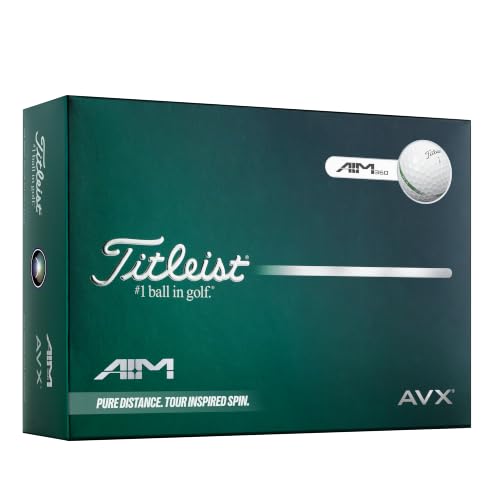
Titleist AVX AIM
For golfers who want a different style of ball entirely, other popular premium and mid-range options from established brands are widely available, and you can compare them against the AVX based on the criteria above. If you are also weighing options in other categories of the bag, our guide to Srixon Z-Star XV Golf Balls: 5 Best Picks Compared (2026) covers a competing premium ball in detail, while Forge Way Golf Balls: 7 Best Picks Compared for Every Game offers a wider look at budget and mid-range choices.
FAQ
Is the Titleist AVX a good ball for beginners?
It can be a good fit for beginners and mid-handicap players because the softer feel and moderate spin are generally more forgiving than firmer, high-spin balls. Beginners who are still developing consistent contact often benefit from a ball that is easier to control on partial shots.
Does the AVX spin enough on wedge shots?
It is designed for moderate, consistent spin rather than maximum greenside bite. Golfers who want aggressive check on full wedge shots may prefer a premium urethane ball. Practice your landing zones with the AVX to learn how much roll to expect.
How does the AVX compare to the Titleist AVX AIM?
The two share a product family, and the AIM version is generally marketed with alignment-focused features. Compare the current listings and specifications side by side to decide which matches your priorities, especially if alignment help matters to your setup.
Is the AVX suitable for a slow swing speed?
Two-piece balls are often a reasonable match for moderate and slower swing speeds because they tend to compress less and launch more easily. Confirm compression details on the manufacturer page if you need precise matching.
Should I play the AVX for practice or only for rounds?
Many golfers use a consistent ball for both practice and play so they can trust their numbers. Playing the same ball on the range and course makes it easier to judge distance and spin changes.
How often should I replace golf balls?
Replace balls when the cover is cut, scuffed badly, or the ball no longer flies or feels consistent. Many golfers lose balls before they wear them out, so a few spares in the bag is a practical habit.
Can a ball alone fix my short game?
No. The ball is one variable. Consistent wedge technique, correct club selection, and regular short-game practice make a far bigger difference. For a structured approach, see our chipping and short-game drills to build the skills that the ball cannot provide.
Is the AVX a good choice for a golfer who slices?
A ball with moderate spin and less side spin can help some golfers who slice, but the ball does not correct swing path. Pair any ball choice with a swing check, and consider alignment practice with sticks or a training aid to reinforce a square setup.
Final Verdict
For mid-handicap golfers who want a softer, controllable two-piece ball with Titleist quality, the titleist golf balls avx is a reasonable choice, especially for players who value consistency across a full round. Its strength is predictability: a moderate spin profile and a comfortable feel that help you manage tee shots, approach play, and putting without fighting the ball. It is less ideal if you need maximum greenside spin or want the most distance a two-piece design can offer. Test it over several rounds, track your short-game results, and compare it with the AIM version before committing.
View on AmazonRelated reading
About Owen Palmer
Owen Palmer is part of our editorial team and reviews and edits our putting & short game guides, checking product details against manufacturer specifications and owner feedback.
About the author
Owen Palmer writes reviews and buying guides for Putting For Par.