Callaway Chrome Tour Golf Balls Review: Is It Worth It?
Callaway Chrome Tour golf balls review: who should buy them, who should skip them, and how they stack up on feel, distance and short game.
 By Owen Palmer
Updated November 11, 2026
 By Owen Palmer
Updated November 2026
The Callaway Chrome Tour golf ball is aimed at golfers who want a tour-caliber feel without paying for a premium three-piece construction. It suits mid-handicap players who prioritize consistent distance, a firm but controlled feel off the driver and irons, and a ball that holds up over several rounds. It is a poor fit for low-handicap players who shape shots heavily and want maximum greenside spin, or for golfers who prefer a very soft, low-compression feel around the greens. Read on for a research-based look at specifications, owner feedback patterns and how the ball compares to the most closely related Callaway option.
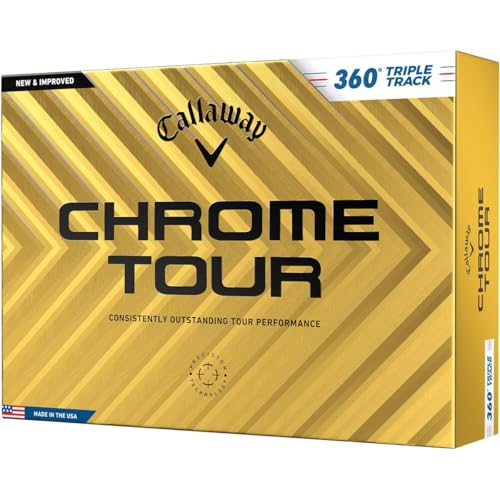
Callaway Golf Chrome Tour Golf Balls (White)
Product Overview
The Callaway Chrome Tour is a white, multi-layer golf ball sold under Callaway’s Chrome line. Callaway positions the Chrome Tour as its higher-performance tier within the family, with a focus on long, straight tee shots and dependable flight through the air. Like most ball models in this category, it is built around a firmer core for distance and a cover designed to balance durability with greenside control.
Callaway markets the ball primarily to recreational and competitive golfers who want more out of their equipment than a basic two-piece ball offers. It is not designed as a short-game specialist ball. Instead, it aims to deliver a blend of distance off the tee and enough spin around the green to keep approach shots and chips under control. If your priority is a soft, spinning ball for wedge play above all else, you will want to compare it against softer-cover alternatives before buying.
Because the product is sold in a standard white finish, it works well for players who want a clean, traditional look on the course and a ball that is easy to track in the air and on the green.
Key Features & Specifications
The table below lists the characteristics that are reasonably well established for this model. Where exact figures vary by production run or are not published in a consistent form, the entry is described qualitatively rather than given a number.
| Feature | Details |
|---|---|
| Brand / Model | Callaway Golf Chrome Tour |
| Color | White |
| Construction | Multi-layer (multi-piece) design |
| Intended player | Mid to low handicap golfers seeking distance and control |
| Primary strength | Flight consistency and distance off the tee |
| Feel | Firmer than soft-cover balls; manufacturers describe it as controlled rather than soft |
| Short game spin | Moderate; intended to support wedge control without the extreme spin of premium urethane tour balls |
| Sold as | Standard golf ball packaging (check listing for dozen or multi-pack count) |
Pros & Cons
Pros
- Strong distance potential for golfers with moderate to fast swing speeds
- Consistent flight and predictable landing, which helps with club selection over a round
- Firm, responsive feel that many players associate with a more “tour” ball
- Durable cover that owners often report holds up better than softer balls over multiple rounds
- Clean white finish that is easy to track in the air and on the green
Cons
- Feel is firmer than soft-cover balls, which may not suit golfers who prefer a muted sensation
- Greenside spin is moderate, so it may not satisfy low-handicap players who want maximum check on wedges
- Not the best choice for golfers with slower swing speeds who need a lower-compression ball
- Owners who prioritize putting feel may still find softer options more pleasant on short putts
Performance Analysis
Performance in golf balls is a balance between launch conditions, spin rates and feel, and the Chrome Tour is built to lean toward distance and stability. Based on the design intent and the feedback patterns typically reported for multi-layer balls in this tier, the most consistent themes are straight flight, reliable distance off the driver and iron, and a firmer impact feel.
Off the tee, the ball is generally positioned for players who generate enough clubhead speed to compress a firmer core. Golfers in the mid-80s to low-90s mph range with driver swings often report the most benefit from distance-oriented multi-layer designs, while players with much slower swings may find that a lower-compression option launches higher and carries farther for them. A simple test is to watch your launch angle and spin on the range: if you launch low with excessive spin, a firmer ball like this one may help, and if you launch too low with little spin, a softer ball may be the better fit.
Around the green, moderate spin is the key trade-off. Owners who hit mid- and short-iron approaches with a descending blow generally get reasonable check and control. Golfers who rely on very high spin from a soft cover around the greens, however, may notice that the Chrome Tour does not check up as aggressively. For chips and pitches, a practical drill is to hit five shots from 30 yards to a target, then compare the number of times the ball stops within 6 feet of the mark against your current ball. This will tell you more about your own performance than any spec sheet.
On the putting green, the firmer feel is the most noticeable difference compared with soft-cover balls. Some players find that a firmer ball gives them better distance control on lag putts, while others feel less connection. If your putting is your main concern, it is worth testing a few balls on the practice green before committing to a dozen.
Who Should Buy This Product?
This ball is a strong choice for:
- Mid-handicap golfers who want more distance and straighter flight without moving to a premium urethane tour ball
- Players with moderate to fast swing speeds who launch the ball low and want a firmer, more penetrating flight
- Golfers who play in windy or firm conditions and value predictable roll and flight
- Anyone who wants a durable ball that will not wear out quickly over a season of play
You should probably skip this ball if you are a low-handicap player who needs maximum greenside spin, if you have a slower swing speed that requires a lower-compression option, or if you strongly prefer a very soft feel for putting and chipping. In those cases, a softer or spin-focused ball will serve you better.
Buying Guide
Choosing a golf ball comes down to four questions: how fast you swing, how much spin you want around the greens, what feel you prefer, and how much you lose or wear through each round. Start with your driver swing speed. If you are below roughly 85 mph, look at lower-compression options. If you are above that range and launch low, a firmer multi-layer ball like the Chrome Tour is worth considering.
Next, think about your short game. If you rely on high spin from wedges, a urethane-cover ball will almost always check up more aggressively. If your greenside game is more about controlled rolls and you are happy with moderate spin, a distance-oriented ball is a sensible choice.
Finally, test your options. Hit a half-dozen shots with each candidate ball at the range and note your launch, spin and carry. Then putt a few 10-foot and 20-foot putts with each to see how the feel and roll compare. Keep notes so you can make a decision based on data rather than marketing.
Here are three well-known alternatives worth comparing:
- Callaway Chrome Golf Balls: a closely related Callaway option that many golfers compare directly with the Chrome Tour when deciding between models in the same family.
Callaway Chrome Golf Balls
For readers who want more context on how Callaway’s lineup fits together, see Callaway Chrome Tour X Golf Balls Review: Features and Performance and Callaway Golf Balls Supersoft Review: Pros and Cons. If you are still weighing feel against distance, Golf Balls Low Compression: How to Choose the Right Ball (2026) walks through the swing-speed considerations in more detail, and Golf Balls Pro V1x: A Practical Buyer's Guide for Short Game and Putting (2026) covers how a premium urethane ball compares when short-game control is the top priority.
FAQ
Are Callaway Chrome Tour golf balls good for mid-handicap golfers?
Yes, in general. Mid-handicap players who want more distance and straighter flight without moving to a premium urethane ball are the audience the design targets. Owners who swing at moderate to fast speeds tend to report the most benefit.
Do the Chrome Tour balls spin enough for wedge play?
They offer moderate spin, which is enough for most approach and pitch shots. Golfers who need very high spin on every wedge shot will likely find a urethane-cover tour ball checks up more aggressively.
Are these balls too firm for slower swing speeds?
They can be. Golfers with slower swing speeds often benefit from lower-compression balls that launch higher and compress more easily. If your driver swing speed is well below the range where firmer balls shine, look at a softer option first.
How do the Chrome Tour balls feel on putts?
The feel is firmer than most soft-cover balls. Some players find this gives them better distance control, while others prefer a softer sensation. Test a few balls on the practice green before deciding.
How durable are they compared with softer balls?
Owners often report that multi-layer balls with firmer covers hold up well over multiple rounds, showing fewer scuffs and less cover wear than softer alternatives. Durability will still depend on how often you hit them into trees, cart paths and rough.
Is the Chrome Tour a good choice for windy conditions?
Its lower-spin, penetrating flight can help in wind for many players, since it tends to hold its line and reduce ballooning. As always, a practical range test in similar conditions will give you the clearest answer.
Should I switch to these balls if I already play a softer model?
Only if you are seeking more distance and a firmer feel and you are comfortable with reduced greenside spin. Try a sleeve or a dozen before committing, and track your scores and short-game results for a few rounds to see whether the change helps.
Final Verdict
The Callaway Chrome Tour is a solid, distance-oriented multi-layer ball for golfers who want firm feel, straight flight and durability. It is a good fit for mid-handicap players with moderate to fast swing speeds who do not need maximum greenside spin. It is a less convincing choice for slower swingers, for low-handicap players who rely on high wedge spin, or for anyone who puts a premium on a very soft feel. Test it on the range and practice green before committing, and compare it with the related Callaway model above to find the best fit for your game.
View on AmazonRelated reading
About Owen Palmer
Owen Palmer is part of our editorial team and reviews and edits our putting & short game guides, checking product details against manufacturer specifications and owner feedback.
About the author
Owen Palmer writes reviews and buying guides for Putting For Par.