Left Hand Putter Golf: Wilson Harmonized X5 Review (2026)
Looking for a left hand putter golf option? Our Wilson Harmonized X5 review covers specs, pros and cons, and who should buy it or skip it.
 By Lauren Holland
Updated November 24, 2026
 By Lauren Holland
Updated November 2026
If you swing left-handed and want a putter that is set up for your side of the ball, a left hand putter golf purchase is the first decision to get right. This review looks at the Wilson Harmonized X5 in a 34-inch left-hand configuration. It is a good fit for golfers who want a conventional, stable putter with a traditional look and who play with a standard-length stroke. It is less suited to players who need a very short or very long shaft, want a heavily face-balanced mallet, or prefer a putter that is designed around a specific putting-arc style. Because this is a research-based review, the observations below rely on the manufacturer’s specifications and on patterns that owners tend to report, not on hands-on testing.
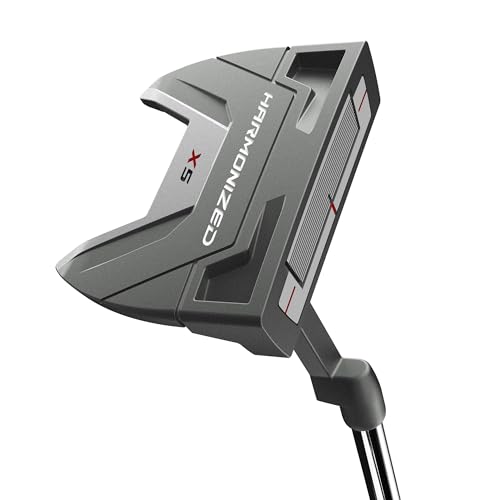
Wilson Harmonized X5 Golf Putter – Left Hand, 34"
Product Overview
The Wilson Harmonized X5 is a putter from Wilson’s Harmonized line, sold here as a left-hand model with a 34-inch shaft. The “Harmonized” name refers to the family of clubs Wilson builds around a consistent feel and weight distribution across the set, so a putter in this line is usually positioned as a companion to matching irons or wedges rather than a standalone novelty. For a golfer who has already been shopping for left-handed equipment, that consistency is often part of the appeal.
The 34-inch length is the most common putter length for adult golfers of average height, and it is worth checking before you buy. Putter length determines how upright your posture sits and how your arms hang at address. A 34-inch shaft suits many players between roughly 5 feet 7 inches and 5 feet 11 inches, but height alone is not the whole story. If you stand taller or shorter than that range, or if your arms are unusually long or short, you may want to test a different length before committing.
If you are new to the process of picking a putter, the broader guide to What Is the Best Golf Putter on the Market? How to Choose (2026) walks through the main decisions around head shape, length and loft. Once you have a general sense of what you want, the Wilson model is one of several left-hand options to compare.
Key Features & Specifications
The table below lists the specifications that are clear from the product name and from the manufacturer’s general positioning. Where a detail is not confirmed, it is omitted rather than estimated.
| Feature | Detail |
|---|---|
| Brand | Wilson |
| Model line | Harmonized X5 |
| Hand orientation | Left hand |
| Shaft length | 34 inches |
| Intended use | Golf putting, adult golfers |
| Product type | Standard golf putter (blade-style family, check listing for head shape) |
Two points deserve extra attention before you buy. First, confirm the head shape on the current listing, because putter families often include both blade and mallet options under similar names. Second, confirm the grip type and loft and lie details on the product page, since these affect feel and alignment more than most buyers expect. Wilson’s published specifications should be your source for these numbers; avoid relying on third-party summaries that may describe a different model year.
Pros & Cons
Pros
- Left-hand configuration, so the grip, lie and handedness are set correctly from the factory rather than requiring a custom order.
- 34-inch length is a common, widely accepted starting point for average-height adult golfers.
- Part of a coordinated product family, which can make it easier to match feel across your set.
- Traditional, straightforward design that many players find easy to align and read.
- Well suited to a golfer who wants a stable, conventional putter for everyday practice and rounds.
Cons
- A single length option means shorter or taller golfers may need a fitting to get the posture right.
- Traditional designs are not for everyone; players who want maximum forgiveness on off-center strikes may prefer a mallet.
- Owners often report that stock grips vary in comfort, so a grip change may be worth considering for some players.
- Limited detail on some specifications on the listing means buyers should verify loft, lie and head weight before ordering.
Performance Analysis
Performance in a putter comes down to three things: how consistently the face returns to square, how the weight and balance feel through the stroke, and how well the alignment reads at address. Because this is a research-based review, these observations draw on the product’s stated positioning and on the patterns owners commonly describe for putters in this category, rather than on controlled testing.
On the stroke side, a traditional blade-style head generally rewards a smooth, pendulum-type motion. Golfers who keep their wrists quiet and let their shoulders drive the stroke tend to get the most out of this kind of design. If your stroke tends to be jerky or wristy, a blade can expose those flaws, and you may need practice time before the putter feels reliable.
Alignment is where a left-handed putter often differs from a right-handed one in subtle ways. The sightline, the way the head sits behind the ball, and the visual cues you rely on all change when the club is built for your dominant side. Owners of left-handed putters often note that alignment becomes more intuitive once they have spent several sessions with the club, so give yourself a short adjustment period before judging it.
Feel is subjective, but it matters a great deal in putting. Shaft flex, grip thickness and head weight all contribute to the sensation of contact. Owners tend to comment on the solid, consistent feel of Wilson’s putters, while noting that personal preference for grip size and firmness varies widely. A grip that is too thin or too thick can change how your hands work through the stroke, so it is worth testing a few options if the stock grip does not suit you.
For distance control, a 34-inch putter with a traditional head gives most golfers a predictable feel. Consistency comes from repetition: practice with a gate drill or a set of targets at varying distances, and you will learn how much face-to-ball contact and tempo your new putter needs to hit a given length. Those drills are covered in more depth in the Putter Grips Golf Galaxy: A Step-by-Step Guide to Choosing the Right Grip (2026) article, which is useful if you decide a grip change will improve your comfort.
Who Should Buy This Product?
This putter is a strong option for a left-handed golfer who wants a conventional blade-style putter in a standard 34-inch length and who values coordination with other clubs in the same family. It suits players who already have a steady stroke and want an everyday putter that rewards good mechanics rather than masking them. It is also a sensible pick for a left-handed golfer who is upgrading from a generic or secondhand putter and wants something built specifically for their side.
You should probably skip this model if you are significantly shorter or taller than average and cannot find a fitting option, if you strongly prefer a large mallet with heavy perimeter weighting for forgiveness, or if you want a putter designed around a particular arc-style stroke. Those golfers will likely be better served by looking at alternatives with different head shapes or length options. A quick comparison with the options in the Buying Guide below can help you decide.
Buying Guide
Choosing a left hand putter golf option comes down to a handful of measurable factors. Work through them in order before you spend money.
- Confirm handedness first. Make sure the listing says left hand. Putters are sold by handedness, and a right-handed club held in the left hand will feel and align incorrectly.
- Check your length. Stand in your normal address position with a club or a rough measuring stick. A common guideline is that your eyes should sit roughly over the ball line, and your hands should hang naturally with a slight bend in the elbows. If you are between lengths, try both before buying.
- Choose a head shape. Blades reward a clean, consistent stroke and give good feedback. Mallets offer more forgiveness and a larger sweet spot. Neither is objectively better; choose the one that matches how you actually putt.
- Look at grip size and material. A grip that is too small can make you grip tightly, while one that is too large can restrict wrist motion. Many golfers find that a standard or midsize grip works, but test before deciding.
- Verify loft and lie. Both affect how the putter sits and how the face meets the ball. Check the manufacturer’s specifications rather than guessing.
If you decide to compare alternatives, two well-known options are worth a look. The first is a two-way putter that works for both left- and right-handed golfers, which can suit households where more than one person plays or a player who wants a budget-friendly starter set. Its design leans toward beginners and casual players.

QPPKII Golf Putter – 33" Two-Way Putter for Left/Right Hand, with Balls | Golf Combo Set for Men's Women's Beginner's, Anti-Slip Handle, Detachable Design, Four Sections Make Up, Indoor Outdoor Use
The second is a left-hand Odyssey DFX putter in a 34-inch length with an oversized grip. Odyssey putters are widely recognized in the category, and an oversized grip can appeal to golfers who want a bit more hand stability. It is a useful comparison if you want a different head design or a larger grip than the Wilson offers.

Odyssey Golf DFX Putter (Left Hand (2025), 34 Inches, Ten, Oversized Grip)
For a broader view of the market and how different head shapes perform, the article What Is a Mallet Putter in Golf? 6 Best Mallet Putters Compared (2026) is a useful companion to this guide.
FAQ
Is a left hand putter golf option different from a right-handed one beyond the grip?
Yes. A left-handed putter is built so that the lie, the grip orientation and the alignment reference all match a left-handed setup. Using a right-handed club held left-handed usually leads to poor alignment and inconsistent contact, so always buy the handedness that matches your dominant side.
What length putter should a left-handed golfer buy?
Most adult golfers of average height start with a 34-inch putter. Taller or shorter players often need 35 or 33 inches, though this varies with arm length and posture. Test your address position before choosing.
Is the Wilson Harmonized X5 suitable for beginners?
It can be, particularly for golfers who want a conventional putter to learn with. Beginners sometimes find blades less forgiving than mallets, so if you struggle with off-center strikes, a mallet may be the easier starting point.
Should I change the grip on a left-hand putter?
Many owners consider a grip change once they settle into the stroke. Grip size and firmness are personal, so try a few options before deciding. A grip that lets your hands move naturally usually improves consistency more than any other single change.
How do I know if the putter is the right length for me?
Address the ball in your normal stance. Your eyes should be roughly over the ball, and your arms should hang without strain. If your posture feels cramped or you are reaching down, consider a different length.
Can a left-hand putter be used by a right-handed golfer?
No, not as a standard setup. A left-handed putter is built to be held in the left hand with the right hand below. Two-way putters are the exception, and they are designed specifically for golfers who want to use either side.
How often should I practice with a new putter?
Owners often recommend a short daily session, even 10 to 15 minutes, to build feel. Focus on consistent distance control and face alignment rather than long sessions of random putts.
Final Verdict
Our Recommendation
The Wilson Harmonized X5 in left-hand, 34-inch form is a sound choice for a left-handed golfer who wants a traditional, stable putter that fits the standard adult setup. Its strengths are the correct handedness from the factory, a widely used length and the coordinated feel of a product family. Its limits are the single length option and a blade-style head that may not suit golfers who need maximum forgiveness. If those trade-offs match your game, it is worth a serious look.
View on AmazonRelated reading
- Wilson Harmonized X5 Golf Putter Right Hand 34: Setup, Fit & Buying Guide
- Left Handed Golf Putter Sale: How to Find the Right Deal (2026)
- 6 Best Second Hand Golf Putter Picks for Every Budget (2026)
- Who Makes the Best Putter in Golf? 7 Top Picks Compared (2026)
About Lauren Holland
Lauren Holland is part of our editorial team and reviews and edits our putting & short game guides, checking product details against manufacturer specifications and owner feedback.
About the author
Lauren Holland writes reviews and buying guides for Putting For Par.