Golf Practice Net Hitting Cage Review: Features and Performance
Reviewing a 10x8 ft golf practice net hitting cage for backyard and indoor use. See specs, pros, cons, and who should buy or skip it before you order.
 By Lauren Holland
Updated November 26, 2026
 By Lauren Holland
Updated November 2026
A golf practice net hitting cage gives you a contained space to rehearse full swings without chasing balls across the yard. This review looks at a 10×8 ft enclosure sold with an impact screen, a blank simulator screen, or a classic net option. It suits golfers who hit off a mat in a backyard, garage, or basement and want a frame that holds up to repeated driver contact. It is less suited to anyone with limited overhead or side clearance, since the cage needs room around it, or to golfers who only chip and putt and would be better served by a smaller chipping net.
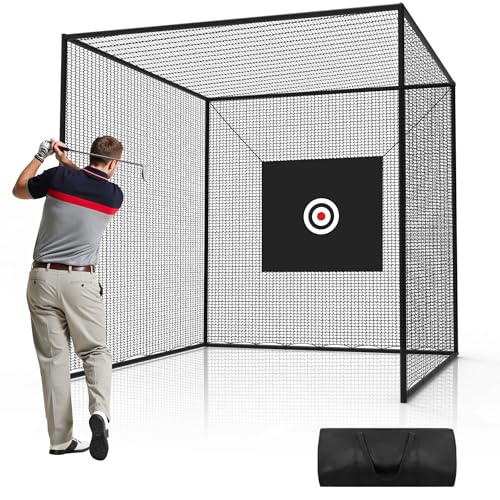
10×8 ft Golf Practice Hitting Net Cage Enclosure – Heavy-Duty Construction for Long-Lasting Practice, Impact Screen, Blank Simulator Screen, or Classic Net for Indoor/Outdoor Backyard Practice
Product Overview
The listing is titled as a 10×8 ft golf practice hitting net cage with heavy-duty construction, sold in a version with an impact screen, a blank simulator screen, or a classic net. The core idea is simple: a rectangular steel-style frame wrapped in netting that catches mishits and stray shots during driving range work at home. The impact screen option adds a solid, heavier panel behind the net, which helps stop balls and reduces the chance of a shot pushing through the mesh. The blank simulator screen version is meant for golfers who project a swing or ball-flight display onto the surface.
Because the product is positioned for both backyard and indoor use, buyers should think about where it will live before they buy. A 10×8 footprint is large enough to stand inside comfortably with a driver, but you still need to plan for the depth of your swing and for where the ball will travel after impact. If you intend to use it in a garage, measure the ceiling and the distance from your hitting mat to the back wall, not just the floor area.
Setup typically involves assembling the frame, attaching the netting or screen, and anchoring the structure so it does not shift during full swings. Owners generally report that the enclosure feels most stable once fully staked or weighted, so expect to spend time on site preparation rather than treating it as a quick unfold-and-use item.
Key Features & Specifications
The table below lists the specifications the product name and standard listing details support. Where a figure is not stated in the listing name, it is left out rather than estimated.
| Feature | Detail |
|---|---|
| Dimensions | 10 ft x 8 ft enclosure |
| Intended use | Backyard and indoor golf practice |
| Construction | Heavy-duty frame described for long-lasting practice |
| Front options | Impact screen, blank simulator screen, or classic net |
| Primary activity | Full-swing practice, including driver work |
| Setup requirement | Requires level ground, anchoring, and overhead and side clearance |
Buyers should confirm the exact frame material, tube gauge, netting denier, and weight capacity on the listing page before purchase, since those details vary between enclosure designs and are the most useful indicators of long-term durability.
Pros & Cons
Pros
- The 10×8 ft footprint gives most adult golfers room to swing a full driver motion without hitting the frame.
- The impact screen version adds a solid backstop, which owners often cite as a way to reduce ball penetration compared with net-only designs.
- Multiple front-panel options let buyers match the cage to their practice style, whether that is net-only, impact-screen, or simulator work.
- The heavy-duty construction positioning suggests it is designed for repeated use rather than occasional sessions.
- It works for both outdoor backyard sessions and indoor spaces with enough height and clearance.
Cons
- The footprint is large, so it will not fit small garages, tight patios, or apartment balconies.
- Assembly and anchoring take real time, and owners often mention that stability depends on how well the cage is staked or weighted.
- Impact screens and simulator screens can show wear over time if struck repeatedly in the same spot.
- Wind can affect an outdoor cage, so buyers in exposed locations should plan on anchoring it well.
- Not suited to chipping or putting practice alone, where a smaller net would be more efficient.
Performance Analysis
Performance for a golf practice net hitting cage comes down to three things: whether it stops the ball reliably, whether it stays put under swing forces, and whether it gives you enough room to swing without restriction. On the first point, the impact screen version is designed to absorb and deflect contact more firmly than a standard mesh net. Owners of enclosures in this category commonly report that a solid screen feels more confidence-inspiring for driver work, while a net-only design can let balls and fragments pass through the mesh if struck hard. If your practice centers on full drives, the impact screen option is the more logical choice.
On stability, the key variable is the frame and anchoring. A cage of this size acts like a sail in wind, and even a modest breeze can cause movement if the stakes or weights are not secure. Owner feedback patterns across cage-style nets suggest that proper ground anchoring, such as stakes through the base or sandbags on each leg, makes a noticeable difference in how the frame behaves during a swing. Plan on checking the frame between sessions, especially after windy days or if you practice on uneven ground.
Room to swing is the third factor. A 10×8 footprint gives many golfers adequate space, but depth matters as much as width. Stand with your hitting mat in the middle of the cage and make a few practice swings with a driver before committing to a placement. If your follow-through brushes the frame, you will either need to move the cage or shorten your swing, which defeats the purpose of full-swing practice. Measure both the length and the height you need, since a driver’s arc travels upward as well as forward.
Durability is harder to judge without long-term data, so treat any durability claim as a manufacturer statement. Netting and screens wear with repeated impacts, and the stitching and attachment points are where failures usually start. Inspect these areas periodically and replace worn panels rather than waiting for a tear to spread.
Who Should Buy This Product?
This cage makes the most sense for golfers who have a dedicated practice area and want to hit full shots regularly. A backyard with level ground and clear space is the ideal scenario, as is a garage or basement with enough ceiling height and depth. Golfers who want to work on driver contact, ball flight, or swing mechanics without going to a driving range will get the most value from it, especially with the impact screen option.
Simulator users who want a surface to project onto may find the blank simulator screen version useful, provided their projector and setup fit the space. Families sharing a yard may also appreciate a contained area that keeps balls from landing in neighbors’ property or among children playing nearby.
You should skip this product if your space is cramped, if you rarely hit full shots, or if your main practice is chipping and putting. Renters who cannot anchor a frame into the ground, or those without permission to set up a large structure, should also look elsewhere. Smaller chipping nets or folding designs will serve these needs with far less commitment.
Buying Guide
Start with measurements. Mark out a 10×8 ft rectangle in your intended space and add extra room behind and above it. Stand with your driver and make a full backswing and follow-through, noting where the club and your body travel. If you cannot clear that motion, choose a smaller or lower-profile option or adjust your practice plan.
Next, decide on the front panel. An impact screen is the better choice for driver work and for minimizing ball penetration. A classic net is lighter and may be easier to store or move. A blank simulator screen only makes sense if you are running a projection setup. Match the panel to what you actually plan to do most often.
Check the frame and anchoring details. Look for stated frame material, tube thickness, and weight capacity. Confirm what anchoring hardware is included and whether you will need to buy stakes, sandbags, or weights separately. Outdoor placement in exposed areas calls for more anchoring than a sheltered garage.
Consider storage and portability. A large cage is not something you will move often, so think about whether you need it to fold or disassemble for winter storage. Measure your storage space before ordering.
If you want to compare alternatives, two options are worth a look. The Golf Batting Cage Netting Golf Practice Nets with Target Net is a netting-focused option where the frame is not included, which suits buyers who already own a frame or want a lighter setup.
Golf Batting Cage Netting Golf Practice Nets with Target Net, Frame NOT Included, 10ft x 10ft x 10ft, Comes with 4 Carabiners & 2 Tie Ropes, Black for Backyard Use
View on Amazon The Rayzesttop Golf Hitting Net, sold in an 11×8 ft configuration with an impact screen and dual targets, is a close competitor for buyers who want a larger footprint and target practice.

Rayzesttop Golf Hitting Net, 11×8 FT Golf Practice Net with Impact Screen | Home Golf Practice Cage with Impact Screen, Dual Targets and Cushioned Frame for Backyard Training and Simulator Setup
For more setup and technique help, see How to Set Up Golf Practice Net: A Step-by-Step Guide for Backyard Practice before you place the cage, and How to Use a Golf Practice Net: A Step-by-Step Guide for Better Contact once it is standing. Buyers who want a broader comparison of cage-style options can also read 5 Best Vevor Golf Practice Hitting Nets for Backyard Driving (2026) and 7 Best Golf Practice Nets for Using a Golf Practice Net at Home. If you are weighing how much room you actually need, How Far Back From Golf Practice Net to Stand: A Step-by-Step Guide answers that directly. For space-limited setups, 7 Best Collapsible Golf Practice Nets for Backyard and Indoor Practice covers smaller alternatives, and Golf Practice Net Tips: 8 Ways to Hit Better Balls at Home offers practice ideas once you are set up.
FAQ
Does a golf practice net hitting cage need to be anchored?
Yes, in most cases. A cage of this size can shift or tip during full swings, especially outdoors. Use stakes, weights, or sandbags on each leg, and check the anchoring between sessions. If you are unsure about ground conditions or structural stability, consult a professional installer or follow the manufacturer’s setup instructions carefully.
Is the impact screen better than a classic net?
For driver work, most owners find the impact screen more reassuring because it stops the ball more firmly and reduces the chance of penetration. A classic net is lighter and may be easier to move or store. Choose based on how hard you hit and how you plan to use the space.
How much space do I need behind the cage?
Leave room for your full swing and follow-through, plus extra behind the frame for the ball’s travel after impact. Stand with a driver inside the cage and make a complete swing to confirm clearance before final placement.
Can I use it indoors?
It can work indoors if the room has enough ceiling height, depth, and clear walls. Measure your swing arc, including the upward path of the driver, before committing. Garages and basements are the most common indoor locations.
Will it hold up to repeated driver hits?
The listing describes heavy-duty construction for long-lasting practice, but durability depends on how often you hit and where the impacts land. Inspect netting and screens regularly and replace worn panels early. Treat long-term durability claims as manufacturer statements until you have your own experience with the product.
Can I use it for chipping and putting?
You can, but it is oversized for short-game work. A smaller chipping net or a dedicated short-game setup will be more efficient for those sessions. Save the large cage for full-swing practice.
Do I need a projector for the simulator screen version?
Yes, the blank simulator screen is designed to receive a projected image, so you will need a compatible projector and simulator software. Plan the projector position and lighting before you buy.
Final Verdict
This 10×8 ft golf practice net hitting cage is a solid choice for golfers with a dedicated, roomy practice space who want to hit full shots at home with confidence. The impact screen option is the strongest fit for driver work, while the net and simulator versions cover more specialized needs. Its size and anchoring requirements make it a poor match for cramped spaces or short-game-only practice. Measure your area, plan your anchoring, and be realistic about how you will use it before ordering.
View on AmazonBefore you buy: helpful guides
About Lauren Holland
Lauren Holland is part of our editorial team and reviews and edits our putting & short game guides, checking product details against manufacturer specifications and owner feedback.
About the author
Lauren Holland writes reviews and buying guides for Putting For Par.